

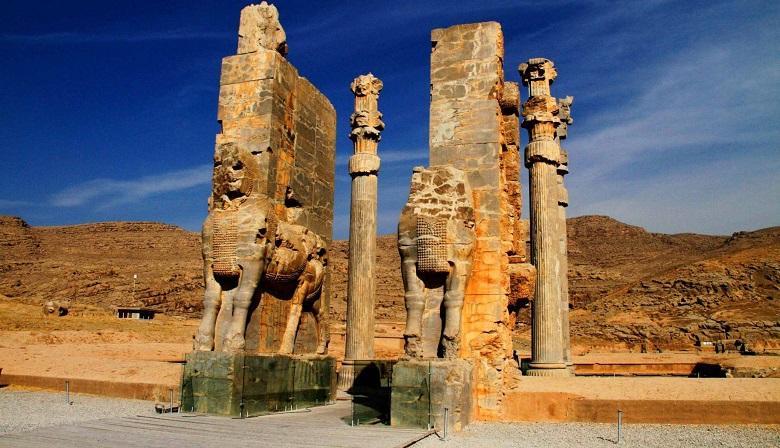
A world of ancient mystery is located in Iran, with some historic sites dating back (over) to 7000 years, far before (civilization of) the Persian Empire and its capital, Persepolis come into existence.
(This archaeological site is the number one tourist destination) The site is the most visited one in the country, and with good reason. Culture Trip takes a look into why this forgotten empire is one of the greatest wonders of the ancient world and one always wonders how this forgotten empire has been one of the greatest wonders of the ancient world.
Persepolis is no doubt the main attraction that lures tourists to Iran. Located about 70 kilometers (43.5 miles) outside of the modern city of Shiraz. These ancient ruins served as the capital of the Persian Empire, which spanned across Northern Africa, India, and southern Europe at the height of its power between 500 and 350 BC. Referred to locally as Takht-e Jamshid and established by King Cyrus the Great in the 6th century BC and finished by his son Cambyses II and grandson Darius over the course of 150 years, Persepolis means “city of Persians.” The architecture was to be indicative of its supremacy; therefore, buildings such as the Imperial Treasury, Apadana Palace, and others were constructed.
Bas-reliefs are among the highlights of this archaeological wonder. Lotus flowers and cypress trees frequently appear throughout the site. Other notable carvings represent nobles, dignitaries, and envoys of Ethiopian, Tajik, Indian, Egyptian, and Armenian nationalities, among others, who visited the capital bearing tributes for the King of Kings. Every detail of their face, hair, curly beards, and clothes is both mind-boggling and connected to the present in appearance.
There are eight palaces in Persepolis: Apadana Palace, Tachar Palace, Hadish Palace, The Queen’s Palace, H palace, Se-Dar Palace, Sad Sotun Palace, and Showra Palace. Let’s take a brief look at these palaces.
Apadana Palace:
Apadana is one of the oldest palaces in Persepolis which was built in order of Darius the Great, and its function was mainly for grand ceremonies and celebrations. Apadana means a grand hall with pillars. Many believe that this is the best palace in Persepolis.
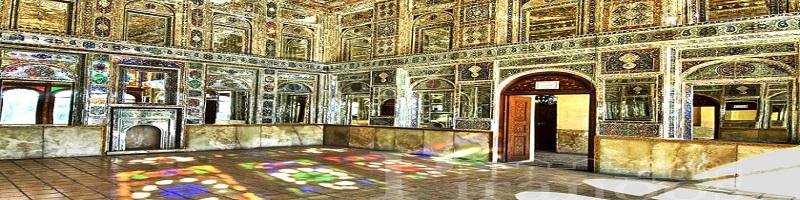
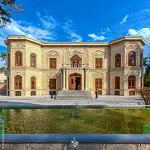
Zinat Al-Molk or Zinat Al-Moluk is one of the architectural and historical phenomena that remnant from Qajar era . It took around 12 years to build and it has long been the home of Lady Zinat Al-Moluk Qavami, the daughter of Qavam al-Molk IV.
This house is located on the west side of Narenjestan Qavam Garden and has one alley distance which is connected with a secret underground way to each other . this way shows that this house is seraglio of Qavam garden .
The house is a superb example of a Iranian traditionally styled house .
while you pass the entrance door , you can see a central court yard and beautiful classic enclosed Persian garden built on the traditional cross plan, lined by parallel rows of trees with a long pool containing a series of fountains down the middle .
in the heart of the garden you can see a beatifull pavilion one of the most fascinating parts and introduces visitors to various parts of Iran’s rich history . this house generally made with woods .
now a day the Zinat Al-Moluk House become a musueum of Fars's celebrities of literature and art and famous Iranian figures . All these sculptures are made with wax .
Some people call this garden as Madam Tussaud of Shiraz .
Also Zinat ol-Molouk House famous for its decorative paintings. Most rooms in this house have wooden roofes with pictures of different animals, flowers, bushed and birds drawn on them . Mirror and glasswork feature prominently in the Zinat ol-Molouk House.
On the second floor in the northern hall and room become a music and conference hall, and movie theater for young artists.
+Zinat Almolk House Opening hours are as bellow:
Monday 8AM–7PM
Tuesday 8AM–7PM
Wednesday 8AM–7PM
Thursday 8AM–7PM
Friday 8AM–7PM
Saturday 8AM–7PM
Sunday 8AM–7PM
+Address: Fars Province, Shiraz, Lotf Ali Khan Zand Street
+Phone: +987132234181
Pasargadae is a city built by Cyrus II the great and located in Murghab plain surrounded by arid mountains in southwestern Iran’s Fars province. In fact, Pasargadae is located 130 Km from Shiraz.
It was the first dynastic and spacious capital of Iranian tribes and the Achaemenid Empire under Cyrus II also known as Cyrus the Great as the pioneer of world peace who helped shape Asian history in 6th century BC . It is symbolically the heart of the Persian Empire. Today, it is an archaeological site and inscribe on Iran’s UNESCO World Heritage Sites.
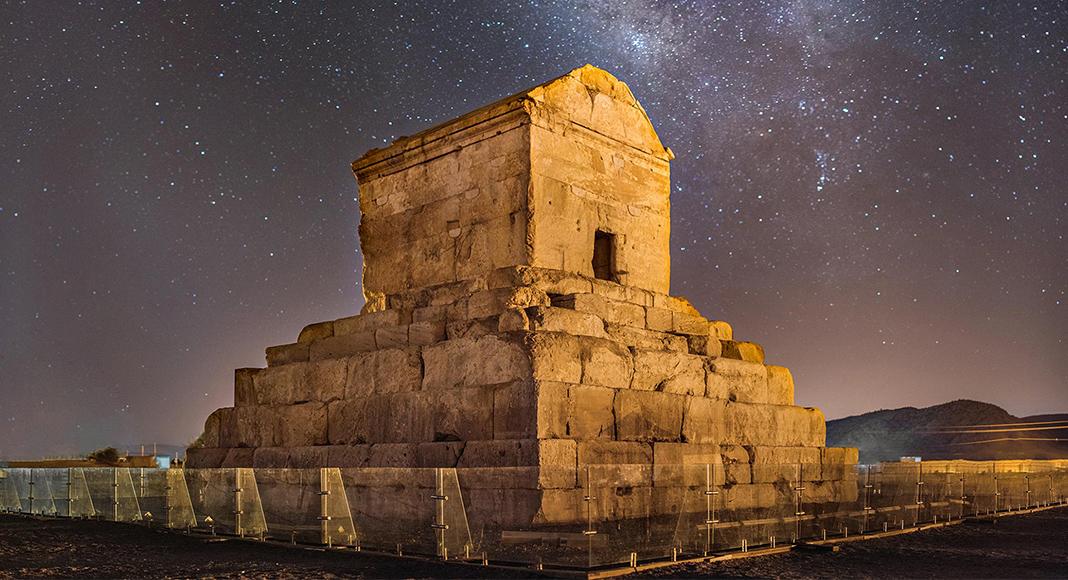
Tomb of Cyrus the Great located in Pasargadae and it is the most important monument of it and it is a focal point for visitors, travelers, historians, and archaeologists to Pasargadae.
Why Visit the Pasargadae Complex?
One of the heritages of global register of Iran and is on the UNESCO heritages list.
One of Iran’s most famous historical attractions is the tomb of Cyrus.
The first capital of Achaemenid Empire here established.
According to historical evidences, Cyrus the Great was responsible for constructing most of the buildings in this complex .
Visiting this place will help you increase your knowledge of Iranian history, especially Achaemenid history.
Pasargadae is a valuable and historical collection of Achaemenid monuments, and you can visit this part of Iranian history.
Pasargadae Garden with global record is also part of the collection. Although this garden does not exist today, it has inspired the famous Iranian gardens after it.
Pasargadae
Introduction to the ancient collection of Pasargadae
To discover the facts of Pasargadae complex you must travel to southern part of Iran and Fars province. Somewhere in the plain of Morghab and the plain of Pasargadae, near Pasargadae, there are ancient structures that are reminiscent of ancient Iran and have many stories to tell.
This is where the glorious Achaemenid history is founded and regarded as the first capital of this great empire. It is also home for the world’s largest and most extensive Achaemenid heritages, and the most diverse and most influential sites of this period. Pasargadae Complex is also the fifth Iranian site on the UNESCO World Heritage List which was able to enter the list with hundred percent of votes, but before that this historic site on September 16, 1931 was in the National Monuments List with registration number of 19.
“In this post we are going to take a close look at all the works of this historical complex of Pasargadae and examine this ancient city from different angles.”
Pasargadae complex generally composed of the following buildings:
►The tomb of Cyrus the Great
►Mozaffari Inn
►Dedicated Palace
►Baram Palace
►Iranian Garden Collection
►Gateway Palace
►Gate stone
►Stone Tower
►Tel bed
►The Sacred Yard
+Pasargadae Opening hours are as bellow:
Thursday 8AM–6PM
Friday 8AM–8PM
Saturday 8AM–6PM
Sunday 8AM–6PM
Monday 8AM–6PM
Tuesday 8AM–6PM
Wednesday 8AM–6PM
+Address: Saadat Shahr,Shiraz,Fars Province
+Phone: 071 4358 2790
A world of ancient mystery is located in Iran, with some historic sites dating back (over) to 7000 years, far before (civilization of) the Persian Empire and its capital, Persepolis come into existence.
(This archaeological site is the number one tourist destination) The site is the most visited one in the country, and with good reason. Culture Trip takes a look into why this forgotten empire is one of the greatest wonders of the ancient world and one always wonders how this forgotten empire has been one of the greatest wonders of the ancient world.
Persepolis is no doubt the main attraction that lures tourists to Iran. Located about 70 kilometers (43.5 miles) outside of the modern city of Shiraz. These ancient ruins served as the capital of the Persian Empire, which spanned across Northern Africa, India, and southern Europe at the height of its power between 500 and 350 BC. Referred to locally as Takht-e Jamshid and established by King Cyrus the Great in the 6th century BC and finished by his son Cambyses II and grandson Darius over the course of 150 years, Persepolis means “city of Persians.” The architecture was to be indicative of its supremacy; therefore, buildings such as the Imperial Treasury, Apadana Palace, and others were constructed.
Bas-reliefs are among the highlights of this archaeological wonder. Lotus flowers and cypress trees frequently appear throughout the site. Other notable carvings represent nobles, dignitaries, and envoys of Ethiopian, Tajik, Indian, Egyptian, and Armenian nationalities, among others, who visited the capital bearing tributes for the King of Kings. Every detail of their face, hair, curly beards, and clothes is both mind-boggling and connected to the present in appearance.
There are eight palaces in Persepolis: Apadana Palace, Tachar Palace, Hadish Palace, The Queen’s Palace, H palace, Se-Dar Palace, Sad Sotun Palace, and Showra Palace. Let’s take a brief look at these palaces.
Apadana Palace:
Apadana is one of the oldest palaces in Persepolis which was built in order of Darius the Great, and its function was mainly for grand ceremonies and celebrations. Apadana means a grand hall with pillars. Many believe that this is the best palace in Persepolis.